2 min read
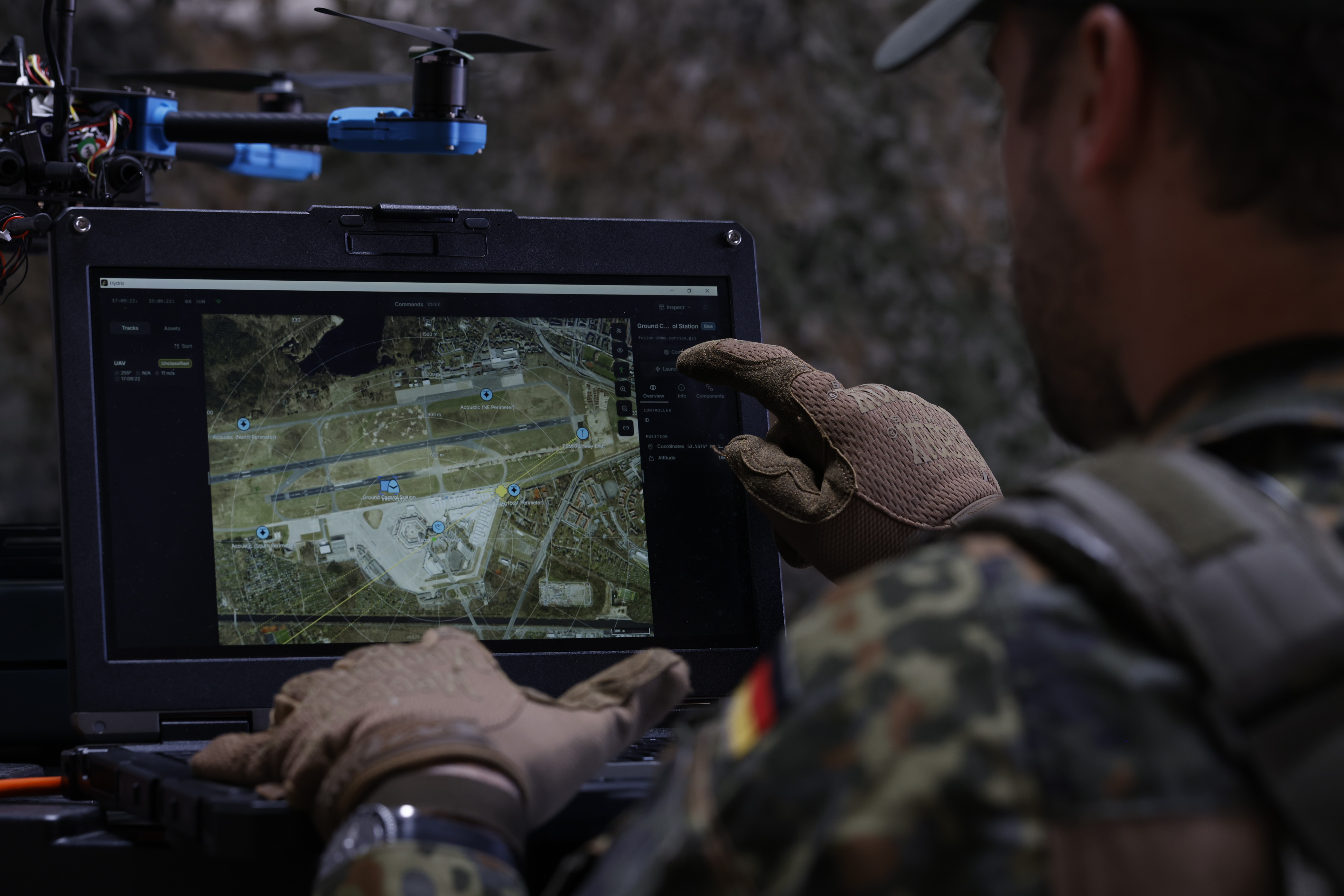
- The open, plugin-based architecture enables rapid, vendor-agnostic integration of sensors, unmanned systems, C2 systems and other capabilities.
- Hydris enables armed forces, security agencies and operators of critical infrastructure to build their own mission environments while reducing integration effort and vendor dependencies.
- Hydris's open-source approach guarantees usersfull sovereignty over software, systems and data.
Berlin, July 9, 2026 – European defence-tech company Project Q today unveiled Hydris, its open-source integration and orchestration layer. Hydris connects sensors, effectors, unmanned systems as well as C2 and mission systems across vendors into a shared operational environment. The challenge facing modern armed forces today is not a lack of innovation, but the ability to integrate and scale new technologies into existing operational environments quickly, securely and without vendor lock-in. Hydris brings existing capabilities into faster operational use, accelerates decision-making and response, and strengthens an open, sovereign defence and innovation ecosystem in Europe.
Hydris fuses data from connected sources into a common operational picture at the tactical edge. It provides AI-based support in prioritising relevant information and enables the control of manned and unmanned systems via existing mission and C2 systems or the Hydris user interface. Humans remain in command at all times: automation operates within configurable rules and supports decision-making without ceding control.
Hydris lays the foundation for an open defence and innovation ecosystem. Through software development kits, templates and reference integrations, Hydris empowers users and their technology partners to shape mission environments independently, configure workflows and develop tailored solutions. Once integrated, capabilities can be deployed across different operational scenarios within the ecosystem. This significantly reduces integration effort and brings innovations into operational use much faster.
Hydris was developed according to the principles of a Modular Open Systems Architecture (MOSA) and enables the modular integration of new capabilities via open interfaces and plugins, thereby strengthening the European defence ecosystem: technology providers, start-ups, SMEs and established industry partners can integrate their solutions once via open interfaces and plugins and deploy them across different customer and operational environments. Already during the development of sub-capabilities, such as specific AI models, Hydris can leverage synthetic data to simplify and accelerate integration into complex operational systems. This lowers market-entry barriers, particularly for small and medium-sized enterprises, while giving armed forces faster access to new capabilities.
Hydris is built on established NATO and industry standards, with interoperability regularly demonstrated in multinational exercises. Hydris's open-source approach guarantees users sovereignty over data, software, systems, and their further development. It runs containerised on commercial off-the-shelf hardware within the user's own infrastructure. This keeps data, operations, and further development under the user’s control. At the same time, Hydris maintains a strict separation between the openly accessible software architecture and protected data spaces and capabilities that are available exclusively to authorised users or are subject to export-control regulations. Data remains under the customer's sovereign authority at all times.
Leonard Wessendorff, CEO and Co-Founder of Project Q, says: “The future of defence lies not in replacing existing systems, but in connecting them. Ukraine shows what matters today: continuous adaptability during ongoing operations – enabled by an open defence ecosystem. That is exactly what we built Hydris for. Rather than replacing existing infrastructure, we integrate what is already in place and connect it into a vendor-agnostic system of systems. We complement existing military capabilities and support armed forces, security agencies and operators of critical infrastructure in reducing dependencies, regaining digital sovereignty and evolving their own capabilities. This creates the foundation for more competition, faster innovation and greater technological independence and thus for better capabilities within a whole-of-society approach to defence.“
About Project Q
Project Q is a European defence tech company with offices in Munich and Berlin. We develop integration infrastructure for modern security and defence ecosystems and connect sensors, unmanned systems, command and mission systems, and other capabilities for armed forces, security agencies, and critical infrastructure operators. To do this, we rely on Hydris, our proprietary open-source integration and orchestration solution. Hydris brings together commercially available (COTS) technologies, data sources, and existing legacy systems into a single operational environment. Through open standards, AI-powered data processing, edge computing, and distributed operations, Hydris provides a vendor-neutral foundation for resilient and technologically sovereign operations.

Q Newsroom
- News
- Jul 14, 2026
Lorem ipsum dolor sit amet, consectetur adipiscing elit. Suspendisse varius enim in eros elementum tristique. Duis cursus, mi quis viverra ornare, eros dolor interdum nulla, ut commodo diam libero vitae erat. Aenean faucibus nibh et justo cursus id rutrum lorem imperdiet. Nunc ut sem vitae risus tristique posuere.
- News
- Jul 9, 2026
Lorem ipsum dolor sit amet, consectetur adipiscing elit. Suspendisse varius enim in eros elementum tristique. Duis cursus, mi quis viverra ornare, eros dolor interdum nulla, ut commodo diam libero vitae erat. Aenean faucibus nibh et justo cursus id rutrum lorem imperdiet. Nunc ut sem vitae risus tristique posuere.
- News
- Jun 24, 2026
Lorem ipsum dolor sit amet, consectetur adipiscing elit. Suspendisse varius enim in eros elementum tristique. Duis cursus, mi quis viverra ornare, eros dolor interdum nulla, ut commodo diam libero vitae erat. Aenean faucibus nibh et justo cursus id rutrum lorem imperdiet. Nunc ut sem vitae risus tristique posuere.

- News
- Jun 15, 2026
Lorem ipsum dolor sit amet, consectetur adipiscing elit. Suspendisse varius enim in eros elementum tristique. Duis cursus, mi quis viverra ornare, eros dolor interdum nulla, ut commodo diam libero vitae erat. Aenean faucibus nibh et justo cursus id rutrum lorem imperdiet. Nunc ut sem vitae risus tristique posuere.