2 min read

Bydgoszcz, 24 June 2026 – NATO CWIX is the Alliance's largest annual digital interoperability exercise, bringing together allied armed forces and industry to validate interoperability, test emerging capabilities, and verify compliance with NATO standards. Held at the NATO Joint Force Training Centre in Bydgoszcz, Poland, CWIX provides a unique multinational environment in which engineers, operators and military planners work side by side to ensure that systems can exchange information reliably across allied forces. This makes CWIX a critical venue for preparing coalition forces to operate together – ensuring that NATO forces are ready to connect, share information, and act together from day one.
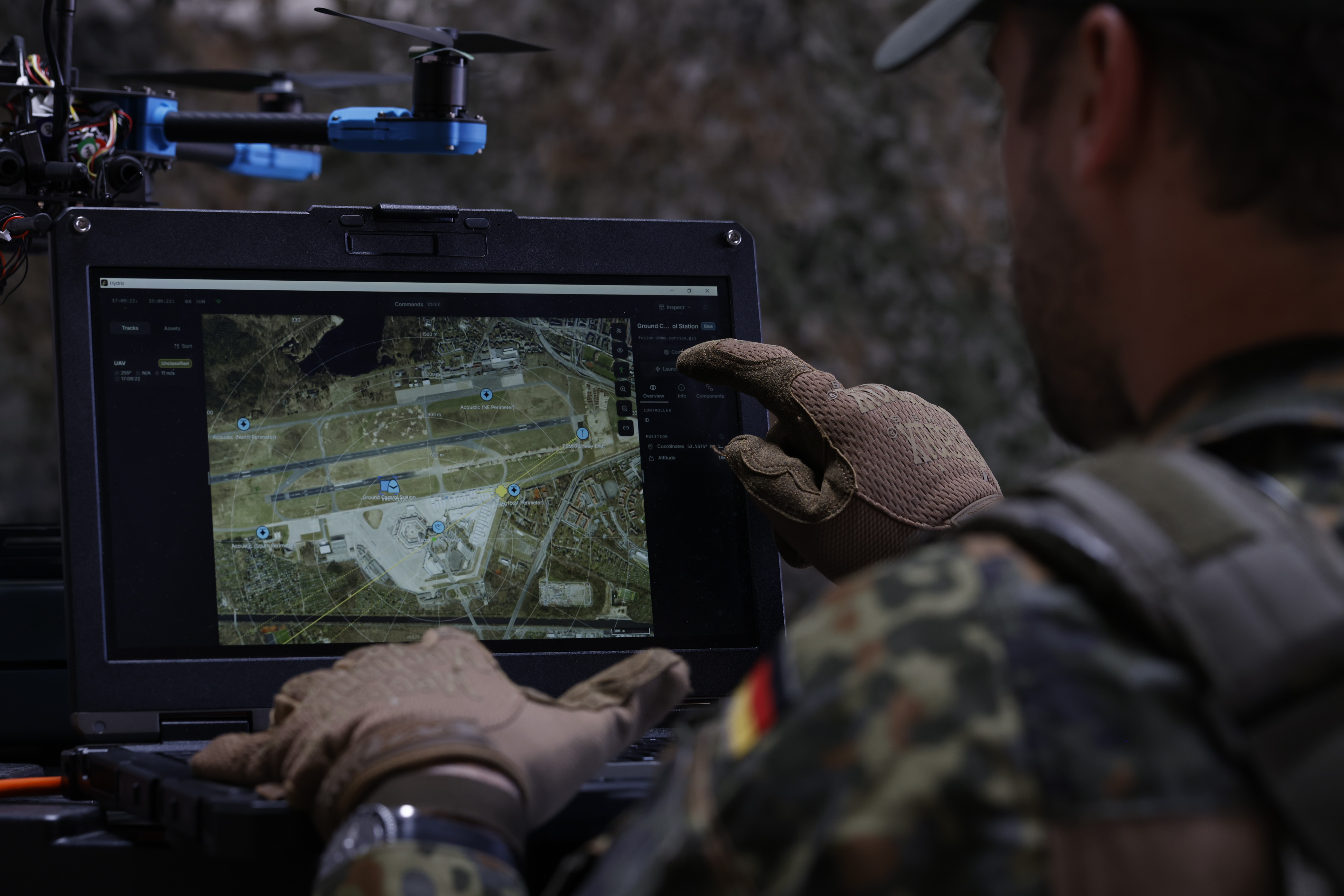
Among this year's selected Innovation Spotlights, Project Q and the German Armed Forces (Bundeswehr) demonstrated the integration of existing, isolated sensor systems into a continuous sensor-to-decider chain – from individual soldier-carried sensors to command-and-control and mission systems across echelons.
Validating the Integration of Legacy Sensors
Military forces operate a growing number of sensors, yet many legacy systems across NATO forces remain isolated from command-and-control systems. As a result, critical information often has to be transferred manually, delaying situational awareness and operational decision-making.
At CWIX 2026, Project Q successfully validated, together with the German Armed Forces, the end-to-end integration of legacy CBRN sensors into a unified sensor-to-decider chain. Project Q's Sensor Connectivity Devices electrically connected previously isolated legacy sensors and provided the gateway to the HYDRIS compute instance. HYDRIS integrated and processed the now digitally available sensor data, provided real-time situational awareness at soldier and squad leader level, transformed mission-relevant detections into NATO-standardized messages, and orchestrated their exchange across the NATO Protected Core Network to the target mission system.
From Isolated Sensors to an Integrated Operational Network
By connecting previously isolated sensors, Project Q enables a real-time Common Operational Picture across echelons. Information is automatically shared, fused, and distributed where it is needed, eliminating manual processes and accelerating the sensor-to-decider chain. The result is improved situational awareness, faster decision-making, and increased operational effectiveness.
Rather than replacing existing systems, Project Q unlocks their full potential. Legacy sensors become part of the digital battlefield, extending their operational value and enabling real-time integration into existing C2 systems, battle management systems, and specialized analysis tools – eliminating the need for costly rip-and-replace approaches.

Q Newsroom
- News
- Jul 14, 2026
Lorem ipsum dolor sit amet, consectetur adipiscing elit. Suspendisse varius enim in eros elementum tristique. Duis cursus, mi quis viverra ornare, eros dolor interdum nulla, ut commodo diam libero vitae erat. Aenean faucibus nibh et justo cursus id rutrum lorem imperdiet. Nunc ut sem vitae risus tristique posuere.

- News
- Jul 9, 2026
Lorem ipsum dolor sit amet, consectetur adipiscing elit. Suspendisse varius enim in eros elementum tristique. Duis cursus, mi quis viverra ornare, eros dolor interdum nulla, ut commodo diam libero vitae erat. Aenean faucibus nibh et justo cursus id rutrum lorem imperdiet. Nunc ut sem vitae risus tristique posuere.
- News
- Jun 24, 2026
Lorem ipsum dolor sit amet, consectetur adipiscing elit. Suspendisse varius enim in eros elementum tristique. Duis cursus, mi quis viverra ornare, eros dolor interdum nulla, ut commodo diam libero vitae erat. Aenean faucibus nibh et justo cursus id rutrum lorem imperdiet. Nunc ut sem vitae risus tristique posuere.
- News
- Jun 15, 2026
Lorem ipsum dolor sit amet, consectetur adipiscing elit. Suspendisse varius enim in eros elementum tristique. Duis cursus, mi quis viverra ornare, eros dolor interdum nulla, ut commodo diam libero vitae erat. Aenean faucibus nibh et justo cursus id rutrum lorem imperdiet. Nunc ut sem vitae risus tristique posuere.